
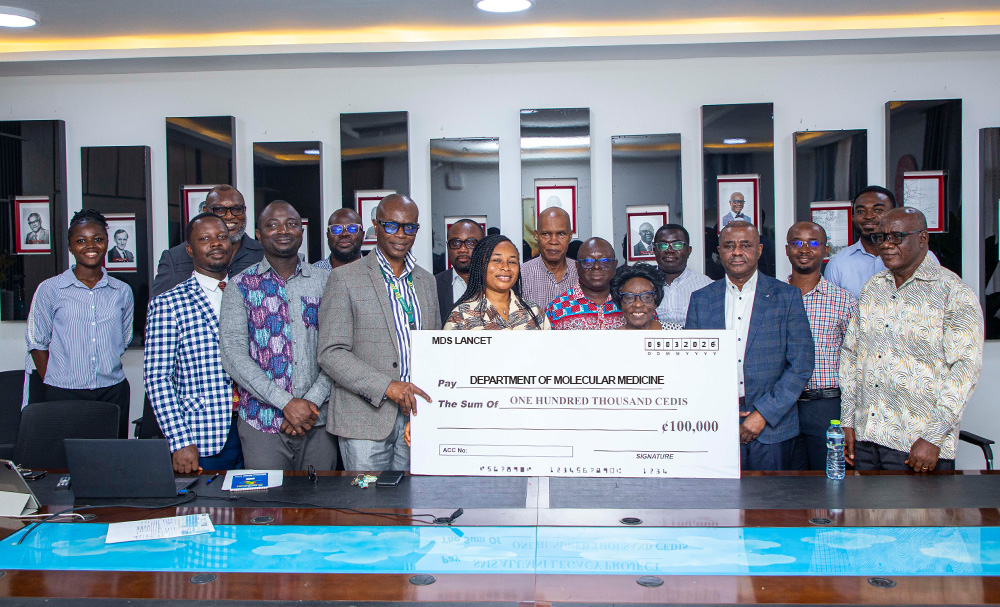
The Department of Molecular Medicine in the School of Medical Sciences at the Kwame Nkrumah university of science and technology, Kumasi (KNUST), has received a donation of One Hundred Thousand Ghana Cedis (GH¢100,000) from MDS Lancet Laboratories to support laboratory renovations aimed at enhancing teaching and learning.
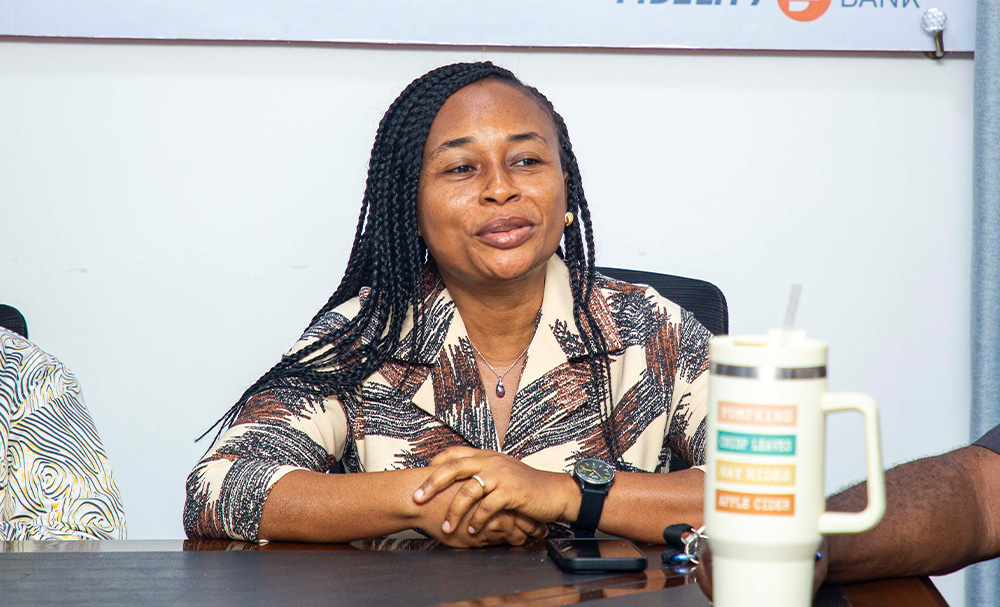
The Head of the Department of Molecular Medicine at SMS, Prof. (Mrs.) Linda Ahenkorah Fondjo, outlined plans to transform the existing laboratory space, which was originally designed for mainly undergraduate training, into a modern facility focused on postgraduate training and advanced research.
“The plan is to transform the laboratory space into a modernized laboratory to enhance postgraduate training,” she stated.
The HoD noted that although the facility will primarily support postgraduate training, it will still accommodate specialized practical sessions for undergraduate students when necessary.
Prof. Fondjo added that the facility would be partitioned into separate working areas including chemical pathology, immunology and molecular medicine laboratories, to enable the department to run multiple specialized activities simultaneously.
“We want to transform this space into a section where we have the chem path lab running, the immunology lab running, and of course, the molecular medicine lab also running,” she explained.
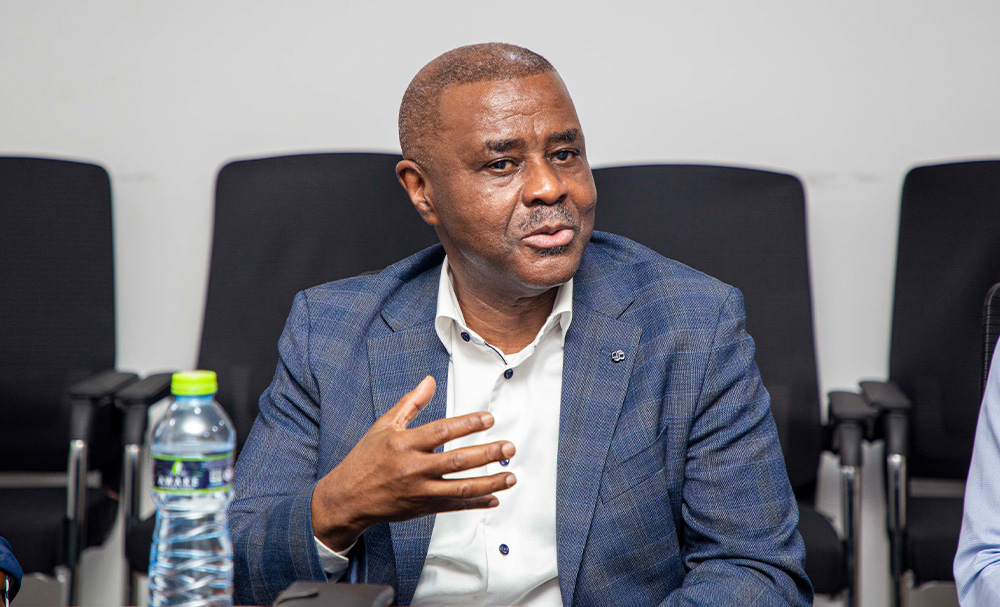
The Chief Executive Officer of MDS Lancet Laboratories Dr. Paul Sekyere-Nyantakyi, who made the presentation also emphasized the critical role of laboratory science and research in modern medical practice and urged greater recognition for professionals working in these fields.
He stated that medical practice extends far beyond clinical work and relies heavily on research, basic science, and clinical trials.
“There’s too much emphasis on getting people to go to medical school and we forget that the medical practice realistically is the research, basic science, clinical trials,” he said.
Dr. Sekyere-Nyantakyi further noted that modern medicine has moved beyond the era of presumptive diagnosis, and without strong investment in areas such as molecular biology and chemical pathology, healthcare systems risk falling behind global advancements.
He stressed that he did not see his contribution as a simple donation but as a responsibility to help strengthen scientific research and training in the university.
“When I had to do this, I didn't see it as a donation, but I felt It's our doctrine to support,” he said.
He added that building local capacity in basic sciences and conducting clinical trials with Ghanaian researchers and participants would significantly improve medical practice in the country.
“If we can get the right people to learn the basic sciences and get interested in clinical trials based in Ghana with our own people, with our own data, the work of medical practice is so easy,” he stated.
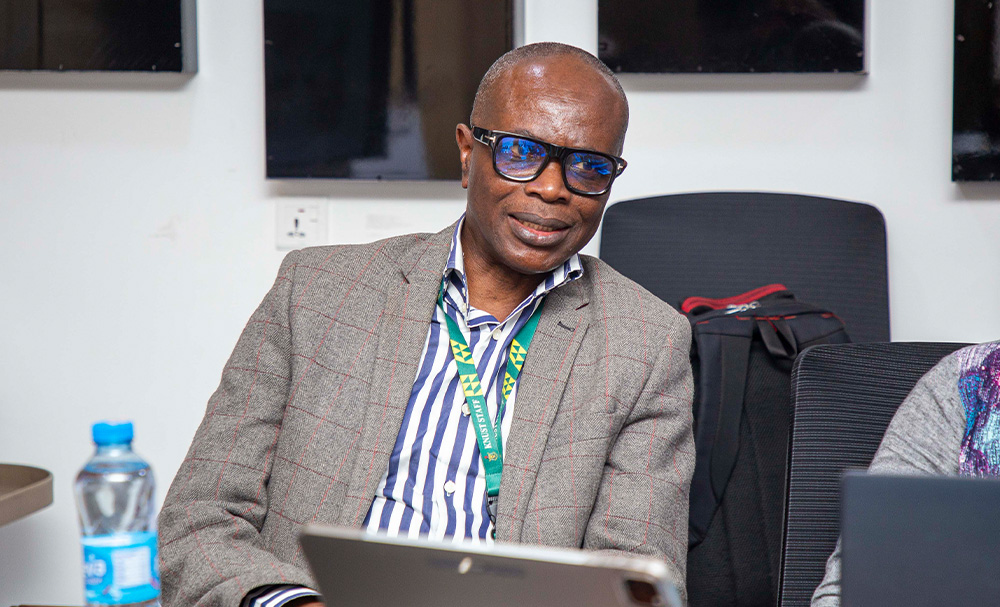
Prof. Akwasi Antwi-Kusi, Dean of the School of Medical Sciences (SMS), noted that the school, since its establishment, has not undergone major renovations and that funds received from the students are largely used to cover administrative costs.
“When it comes to major renovations, equipment purchases and infrastructure improvements, it becomes a serious challenge,” he noted.
Prof. Antwi-Kusi expressed gratitude to MDS Lancet Labs for the contribution and assured them that the contributions received would be used responsibly and for their intended purpose.
“And we want to assure you that whatever you give us, we are going to put it into the intended use. And we are going to manage it well so that it will serve the purpose for which it was made for,” he added.
By Belinda Opoku Danso Photos: Isaac Kweku Duah


